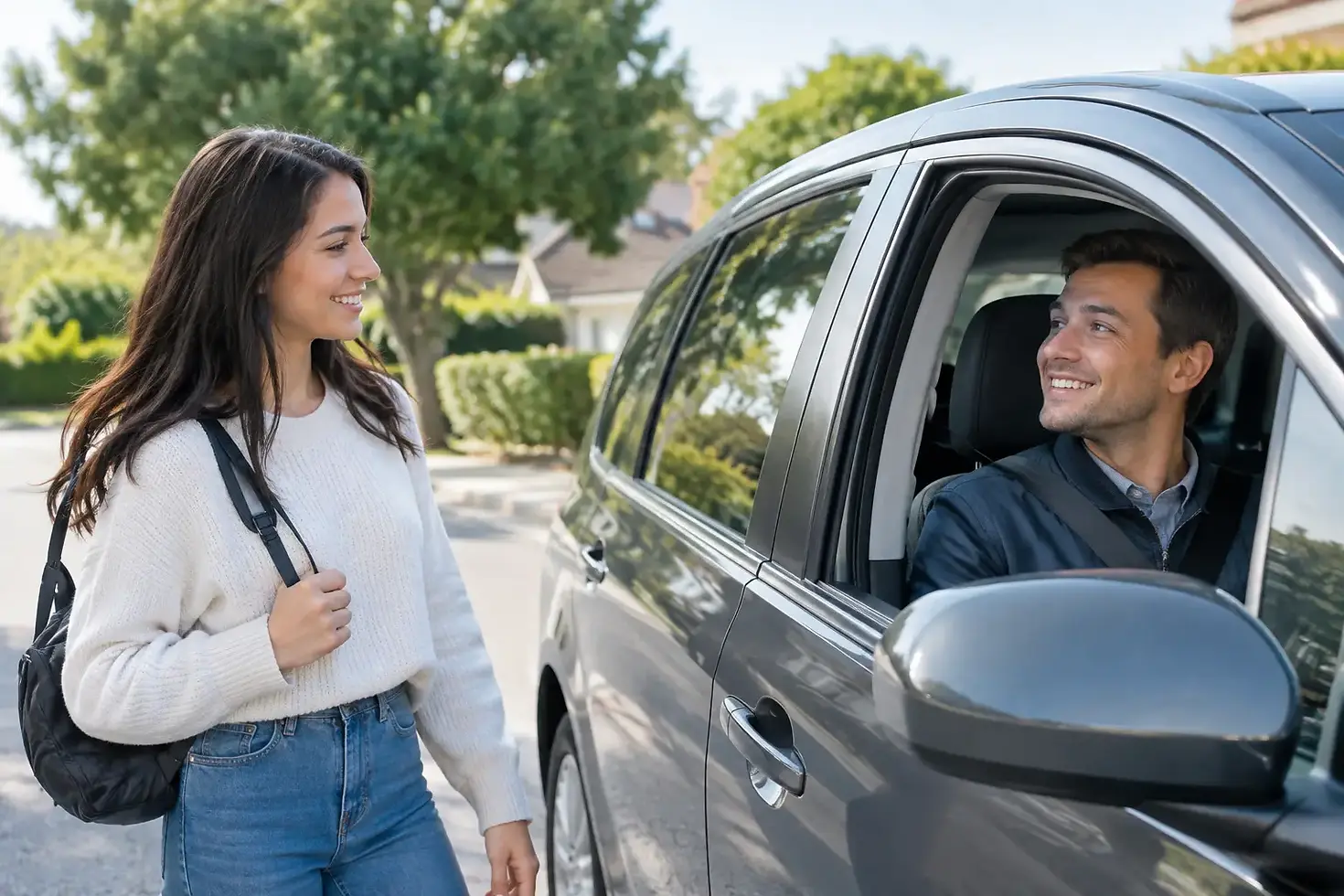
Why a Driving Instructor Home Pickup Service Helps

A driving instructor home pickup service can solve one of the biggest problems new drivers and busy families face: finding time to practice without turning every lesson into a transportation puzzle. Instead of coordinating a ride across town, waiting in a parking lot, or losing an hour to drop-off and pickup, the lesson can begin where the student already is - at home, school, or work.
For a teen with a Florida learner's permit, that convenience matters. So does the chance to begin each lesson calmly, in a familiar area, with an instructor who is focused on one student at a time. For adults returning to driving or starting later in life, it can remove the awkwardness of asking someone for a ride before every lesson. The goal is not merely to make lessons easier to schedule. It is to create more consistent practice, better habits, and less stress behind the wheel.
What a Driving Instructor Home Pickup Service Actually Looks Like
Home pickup is more than a ride to an empty lot. With a private instructor, the vehicle arrives at an agreed location, and the lesson begins with a quick check-in. Maybe you are working on smooth braking, lane position, parking, or simply feeling less tense in traffic. The instructor can tailor the route and the pace around that goal.
The first few minutes may take place on quiet neighborhood streets, especially for a brand-new driver. As confidence grows, the route can include busier roads, intersections, parking lots, school zones, and the kinds of real driving situations that do not always show up in a quick practice loop around the block.
At ACE THE TEST - DRIVER'S ED, lessons are private and taught in dual-control vehicles by Florida State Certified instructors. That means the instructor has access to a brake on their side of the car when needed. For nervous drivers and parents watching their teen build experience, that extra layer of safety can make a real difference.
Why Pickup and Drop-Off Can Improve Practice
The obvious benefit is time. A student can finish a shift at work, wrap up a school day, or step outside from home and get started. Parents do not have to rearrange their own schedule to drive across Palm Beach County twice for one lesson. When scheduling is less complicated, students are more likely to keep practicing consistently.
But there is another benefit: familiarity. Starting near home lets a beginner build confidence in a setting that feels manageable before handling more demanding traffic. An instructor can use the nearby streets to assess steering control, speed management, stop-sign habits, scanning, and turns. Then, as the student is ready, the lesson can move into more challenging environments.
That does not mean every lesson should stay close to home. Driving only on familiar streets can create false confidence. A good instructor gradually adds new routes, heavier traffic, multi-lane roads, unfamiliar parking areas, and test-style maneuvers. Pickup creates a comfortable starting point, not a reason to avoid the real world.
A Better Fit for Teens, Adults, and Nervous Drivers
Different drivers need different kinds of support. A teen may understand the basic rules but freeze when cars are waiting behind them at a left turn. An adult beginner may worry about making a mistake in front of a family member. A returning driver may know how to operate a car but feel rusty after years away from traffic.
Private pickup lessons give each person room to learn without an audience. There is no shared car full of other students, no pressure to keep up with somebody else's lesson plan, and no need to pretend you understand when you do not. Questions are welcome, including the ones drivers often feel embarrassed to ask: Where should I look before changing lanes? How far ahead should I scan? Why does parallel parking feel harder when another car is waiting?
A patient instructor should correct mistakes clearly without turning every mistake into a lecture. Missing a turn, braking too late, or drifting too close to a curb are all teachable moments. The key is addressing the habit, practicing the correction, and moving on without panic.
What to Expect During a Pickup Lesson
A useful lesson has a purpose. Before the vehicle moves, the instructor should know whether the focus is beginner control, defensive driving, parking, road test preparation, or confidence in traffic. From there, the route should match the driver's current ability rather than forcing a one-size-fits-all routine.
For example, a beginner may spend time learning how to adjust mirrors, set a safe seat position, make controlled stops, turn with both hands properly placed, and recognize right-of-way situations. A driver closer to the Florida Class E road test may work on three-point turns, parking, backing carefully, signal timing, and observation habits.
The pickup location can also shape the lesson in a helpful way. A student picked up from work may need practice handling rush-hour decisions. A student picked up from school may need more experience around crosswalks, buses, and crowded parking lots. Someone picked up at home may start with neighborhood control before moving toward busier roads. Real-life routes create real-life awareness.
Come Ready to Drive, Not Guess
Before your instructor arrives, have your learner's permit or valid license with you, wear comfortable shoes, and keep your phone put away. If you are unsure about paperwork, pickup boundaries, or the lesson plan, ask before the appointment. Clear expectations make the session feel calmer from the start.
It also helps to arrive with one honest goal. You might say, “I get nervous when cars follow me,” or “I need help with parking between lines.” That gives the instructor something specific to coach. Progress is faster when the lesson targets the skill that is actually holding you back.
Safety Matters More Than Convenience
Convenience should never come at the expense of safety. Before choosing a driving school with pickup service, families should ask whether instruction is one-on-one, whether instructors are properly certified, and whether the training vehicle includes dual controls. These details are especially meaningful when a driver is brand new or anxious.
You should also ask how the school handles different experience levels. A student who has never driven should not be thrown into a busy road just because the pickup point is nearby. At the same time, a student preparing for a road test should not spend every hour repeating easy neighborhood loops. Good instruction adjusts the challenge level gradually.
Here are four signs that a pickup lesson is being used well:
The instructor explains what the student will practice before the drive begins.
The route becomes more challenging as the student shows control and awareness.
Feedback is specific, calm, and connected to a correction the student can practice.
The student leaves knowing what improved and what to work on next time.
Parents can support this process by asking about progress rather than demanding perfection. “What did you practice today?” usually leads to a better conversation than “Did you make any mistakes?” Every new driver makes mistakes. The goal is to catch them early, understand them, and replace them with safer choices.
Scheduling That Works Around Real Life
Many students need lessons outside the usual weekday routine. Between classes, jobs, sports, family responsibilities, and the simple need to rest, finding a regular practice window can be tough. Weekend availability can be especially useful for families who want focused driving time without squeezing it between school and dinner.
The right number of hours depends on the driver. Someone with prior experience may benefit from a short skills review and targeted road test preparation. A complete beginner or highly nervous driver may need a larger package with steady repetition over several sessions. More hours are not automatically better if they are packed into one exhausting day. Regular practice with time to absorb feedback often builds confidence more naturally.
Pickup and drop-off can help make that consistency realistic. Rather than treating driving practice as a major weekly event that requires three people and careful planning, it becomes an appointment the student can prepare for independently.
The Confidence Comes From Repetition
No driver becomes safe because they completed one perfect lesson. Confidence comes from repeating good decisions until they start to feel natural: checking mirrors before moving, looking far enough ahead, leaving space, slowing down before a turn, and staying calm when another driver does something unpredictable.
A home pickup service removes friction, but the real value is what happens after the instructor arrives. With patient coaching, a safe training vehicle, and practice that matches your actual needs, the drive from your own doorstep can become the start of real independence.


