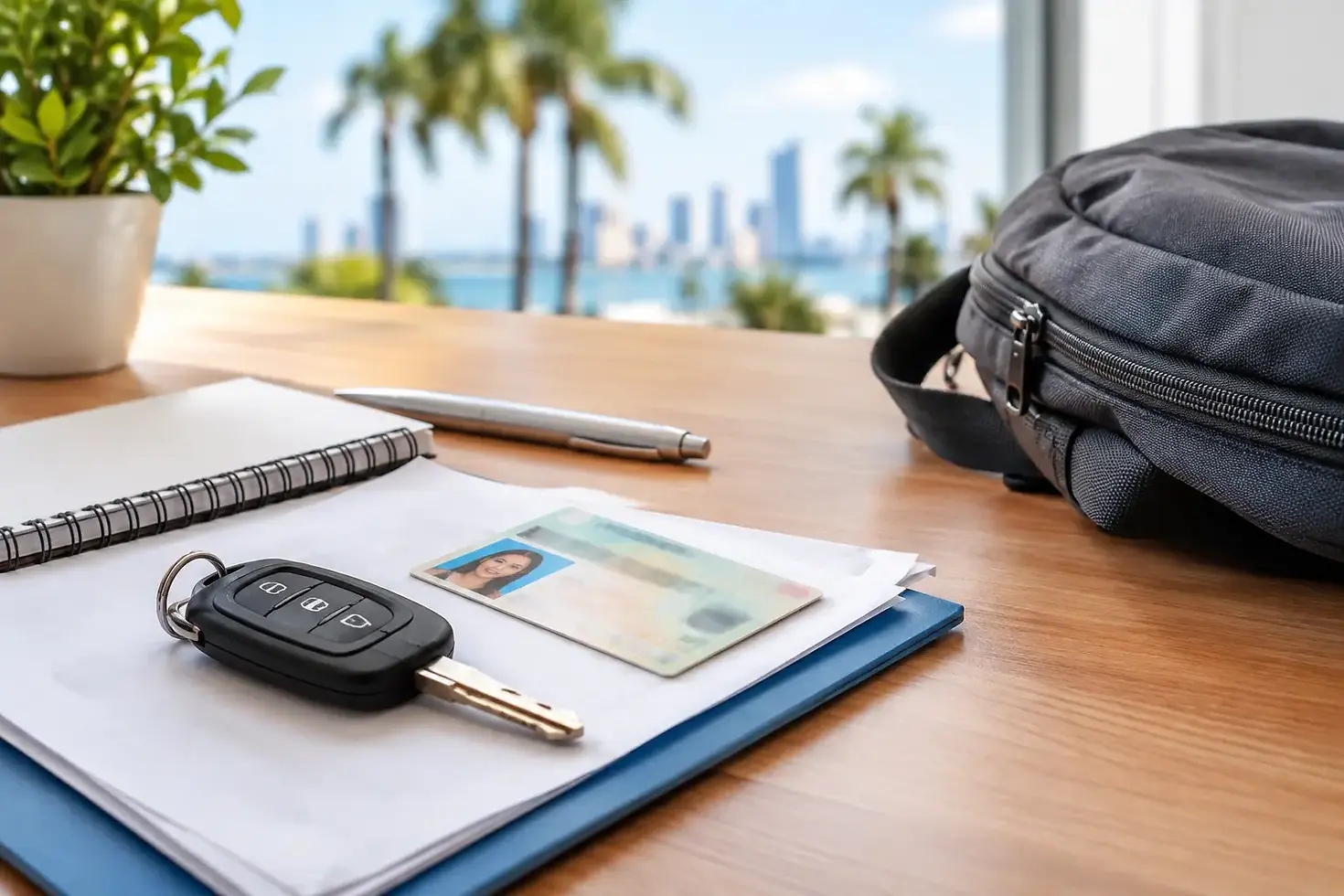
What Documents You Need for a Road Test in Florida

That road test appointment can feel like the finish line - until you start wondering what documents need road test day in Florida. The good news: the paperwork is usually straightforward. The frustrating part is that one missing item can stop a perfectly prepared driver from testing.
Before you leave home, take five calm minutes to check your permit, your vehicle paperwork, and any requirements tied to your age or appointment location. Then you can put your energy where it belongs: safe turns, smooth stops, parking, and staying aware of what is happening around you.
What documents do you need for a road test in Florida?
For a Florida Class E road test, you will generally need your valid Florida learner's permit or learner license, proof of vehicle registration, and proof of valid Florida auto insurance for the vehicle you will use. If you are under 18, you also need to meet Florida's supervised-driving requirement before you can take the test.
Your testing location may ask for additional paperwork based on your record, whether your information has changed, or how you scheduled your appointment. That is why it is smart to confirm the requirements with the specific driver license office or authorized testing provider before test day.
Here is the practical checklist to work through.
Your valid Florida learner's permit
Bring your physical Florida learner's permit. A photo of it on your phone is not a replacement. Check it a few days before the test, not while you are pulling into the parking lot. Make sure it is not expired, damaged beyond recognition, or lost in a backpack, wallet, or glove box.
If you recently changed your name, address, or other personal information, verify that your record is current before your appointment. Small record mismatches can create delays that have nothing to do with how well you drive.
Vehicle registration and insurance
The vehicle used for your road test must be legally registered and insured. Bring the current registration and current proof of insurance. Digital insurance cards are commonly accepted, but carrying a printed copy is still a low-stress backup in case a phone battery dies or an app refuses to load.
Do not assume a parent or family member has the paperwork in the car. Ask ahead of time, find it, and put it in a folder with your permit. If you are borrowing a vehicle, confirm that its registration is current and that the insurance covers that vehicle.
Parent or guardian certification for drivers under 18
Florida teen drivers must complete at least 50 hours of supervised driving experience before taking the road test, including 10 hours at night. A parent, legal guardian, or responsible adult who is at least 21 and meets the legal requirements must certify those hours.
Depending on your licensing process and appointment setup, that certification may already be recorded electronically, or you may need a signed form. Do not guess. Check your appointment instructions and ask the office if you need to bring anything showing the 50-hour requirement was completed.
Those hours are more than a box to check. They are where a new driver learns what a real intersection feels like when the light changes, how to handle an impatient driver behind them, and how to stay calm when a parking space looks tighter than expected.
Identification or residency documents, if requested
Most drivers who already have a current Florida learner's permit will not need to start the identification process from scratch at the road test. Still, some situations can trigger a request for additional documents. This can happen if you are replacing a lost permit, updating your name, resolving a record issue, or completing a transaction that requires identity or address verification.
When requested, Florida licensing offices may ask for documents that prove identity, Social Security information, and residential address. Examples can include a certified birth certificate or passport, a Social Security card or qualifying tax document, and proofs of Florida residential address.
For teens who live with a parent or guardian, address documents are often in the adult's name. There are procedures for that situation, but the exact documents matter. Call your testing location before the appointment rather than showing up with paperwork that seems reasonable but does not meet its rules.
Your car needs to be ready, too
Documents get the most attention, but the vehicle itself must be safe and legal for the road test. An examiner can refuse a car that is not suitable for testing, even if you have every paper in order.
Before test day, check that the brake lights, turn signals, headlights, horn, mirrors, windshield wipers, seat belts, and tires are working properly. Make sure the windshield gives you a clear view and that there is enough fuel to complete the test without stress. The passenger seat must be available for the examiner, and the doors should open from both inside and outside.
If you are practicing in one car but testing in another, spend time in the test vehicle first. Every car has a different brake feel, turning radius, blind spot, mirror setup, and backup camera view. A quick practice drive can prevent that awkward first-minute feeling of trying to find controls while an examiner is waiting.
Build a simple road test folder
Road test mornings go better when you do not have to search through the center console. Put your permit, registration, insurance card, appointment confirmation, and any required parent certification in one folder or envelope the night before.
If you wear glasses or contact lenses and your permit requires corrective lenses, bring them. If you use a phone for directions to the office, charge it fully, but do not rely on it as the only place where important paperwork lives.
It also helps to arrive early enough to breathe, use the restroom, adjust your seat and mirrors, and get familiar with the parking area. Rushing into a road test can make even a skilled driver feel scattered.
Common document mistakes that delay a road test
The most common issue is bringing a permit but forgetting the vehicle registration or insurance. Another is arriving in a family car with an expired registration, a warning light, or a broken turn signal nobody noticed.
Teen drivers can also get caught off guard when the 50-hour certification has not been completed correctly. Parents: make time to review the requirement before the appointment is booked. It is much easier to sort out early than to reschedule after your teen has spent weeks preparing.
Finally, do not treat an appointment confirmation as a substitute for your required documents. The confirmation proves you have a time slot. It does not prove that you are eligible to take the test or that the car is legal to use.
Practice for the skills behind the paperwork
Having the right documents gets you checked in. Showing safe habits gets you through the drive. Examiners are looking for control, observation, judgment, and steady decision-making - not perfection or flashy driving.
Practice full stops behind the limit line, consistent signal use, smooth lane changes, safe following distance, backing up with control, three-point turns, and parking. Look through the turn instead of staring at the hood. Check mirrors and blind spots in a way the examiner can clearly see. If you make a small mistake, do not panic and assume the test is over. Reset, follow the next instruction, and keep driving safely.
For nervous drivers, a private review lesson can make the process feel much more manageable. At ACE THE TEST - DRIVER'S ED, one-on-one practice in a dual-control vehicle gives you room to ask questions, repeat the skills that feel shaky, and learn without being rushed or judged.
Your road test is one drive, but the habits you build for it will follow you onto school, work, weekend plans, rainy afternoons, and every unfamiliar road ahead. Pack the folder, check the car, take a slow breath, and give yourself the chance to show the safe driver you have been practicing to become.


